Art & Crimes of Self Obsession
Art and Self…ugh. I am grinding my teeth just thinking about these two.
As someone who has been fully taken by the power of Art (against my will) for a long time now, I have never known it to be an endeavor without struggle. As it should be, right?
Part of an Artist’s responsibility is to wrestle with both the inner vision and the physical material. Meaning and inspiration do not always fall sweetly into our laps, sometimes they must be actively pursued in harsh, infertile conditions.
Art is a violent act. The insides turn outward. The dream hardens into matter. Something ineffable is finally transmitted on an intellectual, intuitive, emotional, structural, or spiritual level.
This is not casual!
If you have ever been the perpetrator of Art in this way…you may know there are often MANY opportunities in the folds of this process to feel quite threatened, confused, insecure and uncomfortable.
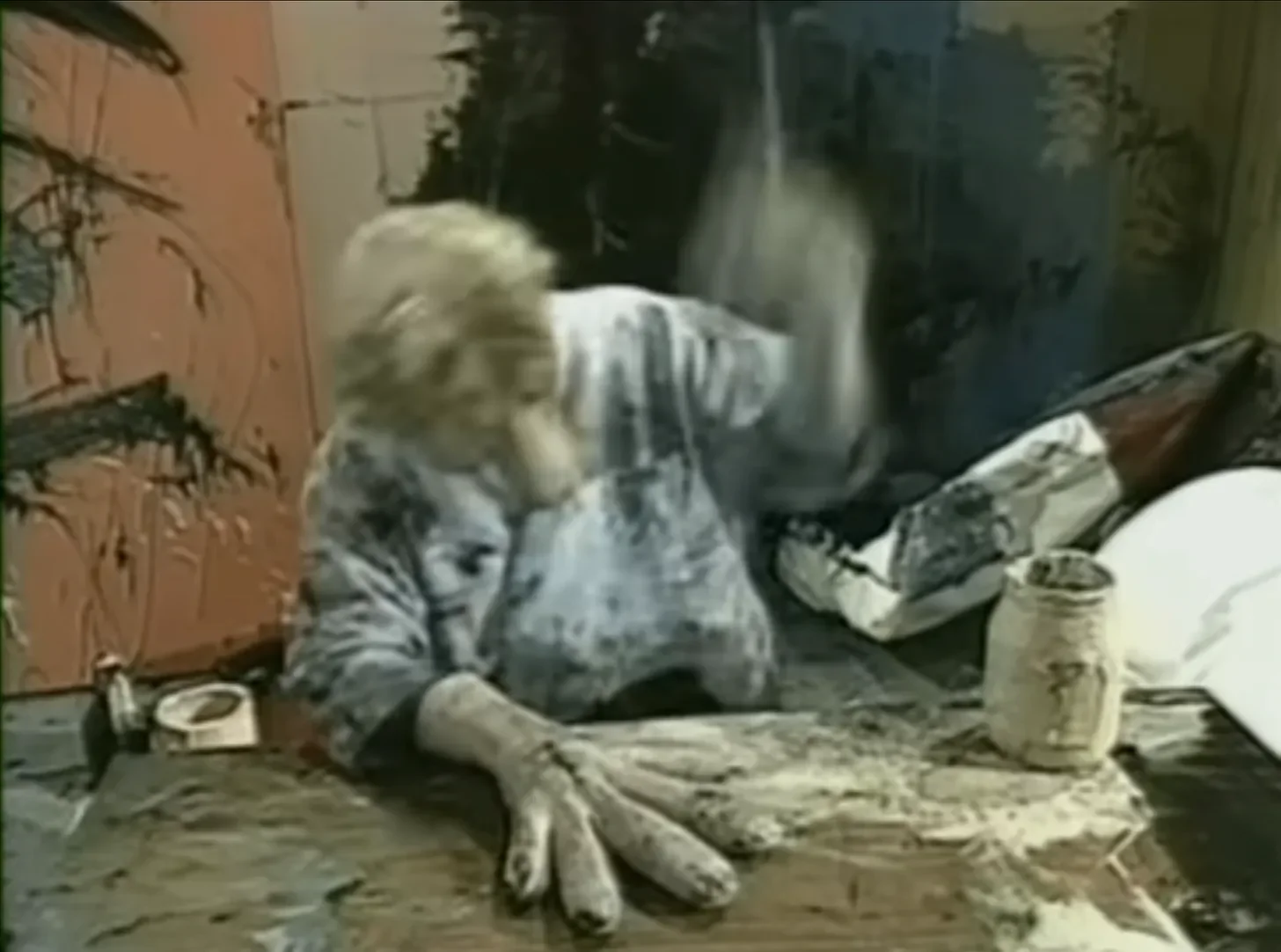
Video Still from “Painter”1995 by Paul McCarthy
Despite my love for the process of Art making, I am personally astonished by how easily I can produce a long, convincing list of reasons I should not spend time making it, thinking about it, or even experiencing it. This is why I also go out of my way to make lists of all the reasons Art is essential and necessary, (like this one) to keep the scales as balanced as possible…
Still, the negative list should not be dismissed. As I said, it is good practice for an Artist to thoroughly investigate their motives, fears, and purpose.
This requires proper analysis!
Which brings me to a recurring entry on my personal “reasons not to bother” list: the relationship between Art and Self. More specifically, the uncomfortable parallels between making Art and the degree of self involvement the process seems to demand. This anxiety is amplified by the individualistic, narcissistic bent of American culture, a pattern with global ripple effects. It feels both natural and necessary to question our role in perpetuating it.
So, what really is the difference between ego fueled navel gazing and drawing a golden thread of connection through one’s own experience into something shared?
Perhaps the distinction lies in intention.
Art made in the fragile territory of unchecked ego tends to ring hollow. The ego wants control, especially over how it is perceived. It builds masks out of insecurity and avoids vulnerability and difficult truth.
In contrast, impactful Art requires surrender. Sensitivity. Depth that only comes from rigorous questioning and exploration.
Art should interrogate barriers. Maybe even blast through them. Not construct them.
I want Art to touch me, not impress me. I want Art that digs for truth!
I want Art with structural integrity, not something that collapses like a cardboard cutout in the wind.
You know that feeling when someone approaches you with questionable motives? Whether the secrecy be intentional or not, we humans are surprisingly intuitive about these things.
The person who looks you in the eyes but somehow also looks right past you as they try to ensnare you in some kind of financial scheme. Or the near stranger who becomes disproportionately invested in your reaction to them for reasons that clearly have nothing to do with you.
Conversely, we hopefully all have that friend who is a breath of fresh air, simply because we trust them to say what they mean and mean what they say.
Intention matters. Art is no exception.
We all harbor ulterior motives at times. It is worth excavating them. If attention, admiration, or fame is the primary goal, there are probably more efficient routes than Art, honestly.
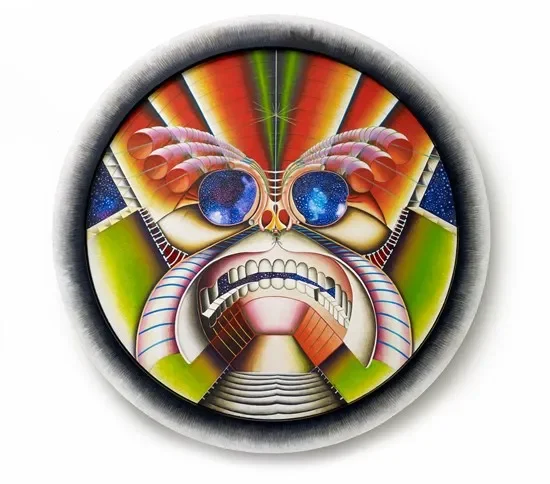
The Anguish of Being and the Nothingness of the Universe By Marcos Raya 2000
Another item on my “why not bother” list is the fear of adding to the deafening noise of our era.
We are swimming in endless overstimulation, physical, digital, psychological. The idea of creating more things at a time like this makes me feel slightly ill. Why add to the dog pile? Are Artists just little narcissists who cannot read the room?
Maybe yes. Maybe not.
In the age of the “content creator,” Art and creation are no longer synonymous. Casino engineered social media, product cycles, advertisements, lifestyle branding, these are creations too. Many of us feel addicted, bombarded, or existentially numbed by them.
Not to mention the increasingly plausible reality that AI bots account for a meaningful portion of online traffic. No wonder disenchantment is spreading.
Do not get me wrong. Real creativity has absolutely flourished online. But at this point, authentic creation seems to happen despite the platforms, not because of them.
Anyway, Social media as we know it may be dying. Something else will likely crawl out of its carcass. Pandora’s AI box has burst open. That is a separate can of worms. Let me not spiral.
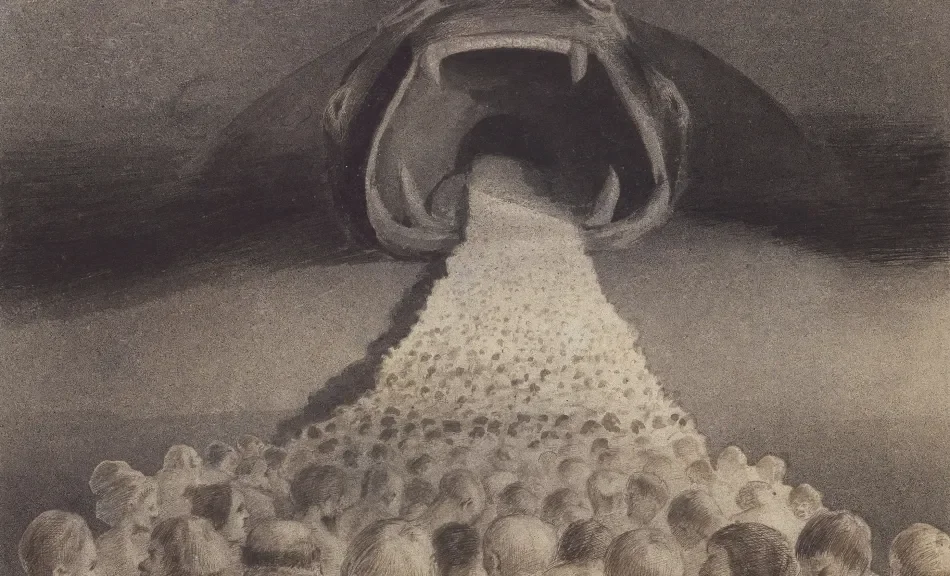
Into the Unknown by Alfred Kubin 1901
My point is, we are in a cultural crisis of truth and authenticity. We are no longer even confident in our ability to verify reality at this point. As AI sludge and redundant noise multiply, so does a collective craving for what feels ensouled, something we can recognize instinctively. A tactile, raw, undeniable thing…
So no, I would argue that truth seeking, experimental, vulnerable Art does not add to the noise. It cuts through it like a knife. It is less the problem and more the antidote.
And I do not want to sound puritanical. If you make Art, you have absolutely produced something that rhymes with boring trash. I certainly have. Or worse, it is not “bad”, but it also does not quite resonate. This is like, all the damn time for me. A dreadful experience for the poor little Artist ego to endure.
Bringing it back to intention…
It is less about any single finished product and more about the long, slow arc of honest exploration and refinement. I would even wager that a true narcissist could not withstand such a treacherous journey, especially one with so little instant gratification…
trust fund kids and nepo babies might be the acception to this point, but to be fair they often just “find” themselves in creative careers with little to no barriers, rather than rigorously pursuing such a path through many hardships.
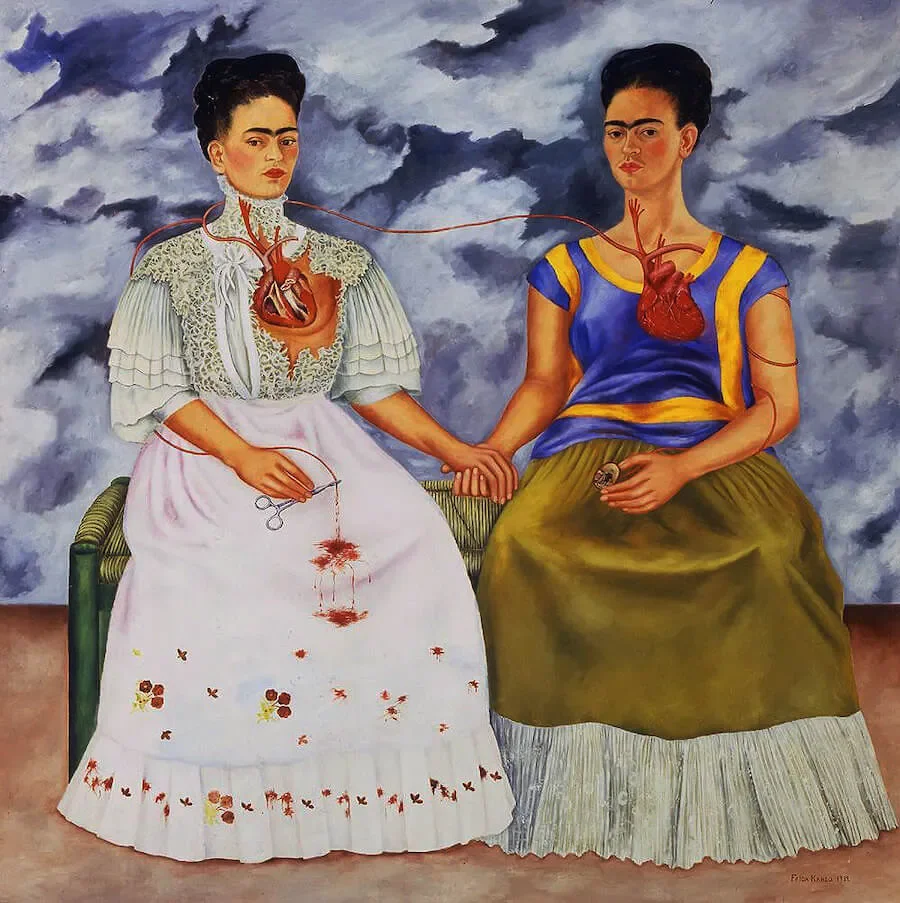
The Two Fridas by Frida Kahlo 1939
Which brings us back to the self absorption question. Is all that solitary contemplation really necessary? Is that not the definition of naval gazing?
There is no denying that many Artists have the tendency to retreat into a world of their own. If this is pure narcissism, or something more complex is up for debate I guess.
Of course I say it’s more complex, but I am biased because I am the guy that is like…"cant hang out I need to go contemplate alone in my apartment tonight.”
Do I sometimes feel weird and guilty about needing solitude? Yes definitely. Anything can be poisonous if the dosage is high enough. If someone becomes so absorbed in their internal world that they lose empathy and connection, that is certainly a problem.
But allow me to paint with generous brush strokes for a second. I suspect many Artists are driven less by self obsession and more by a deep hunger for connection.
Many people drawn to Art experienced early alienation or disconnection. One way to survive that wound is to develop a relationship with nature, materials, music, a dog, or even the inner self. Retreat becomes a way to preserve authenticity.
Normative culture can be rigid, cold, uninspired. It is natural to reach for Art to express something more nuanced and alive.
In my experience, when I give myself time to reflect and metabolize life, I become more capable of helping others do the same.
Yes, excessive introspection can curdle into narcissism. But cultivated self awareness tends to nurture empathy and deepen one’s understanding of others’ complexity.
Communities need contemplative people just as much as they need collaborators and connectors. It takes all kinds. Not everyone is meant to perform the same function here on earth.
Lastly, we cannot talk about crimes of self obsession in Art without addressing narrative. Who controls it? Who distorts it?
One of the things I love most about Art is that it feels like an accessible way for many of us to share the truth of our stories, both individually and collectively. There is something about humans and narrative that has always been intertwined. The mythologies and symbols of our culture hold the subterranean desires, values, and ideals that shape who we are.
I realize I have been writing this piece with a romantic tilt toward Art. The other thing about Art, though, is that it’s certainly not immune to the inequalities of the world. Far from it.
Sometimes it feels as though the most boring, stale, privileged people, those with the narrowest scope of experience and depth, are the most comfortable writing the narrative and taking up space.
Meanwhile, the most compelling people you can imagine, deep thinkers with strange mythologies of survival and perseverance and impressive real life skills, are often stuck in the daily grind. They do not tell their beautiful stories for lack of resources or connection, or out of a reluctance to seem self centered.
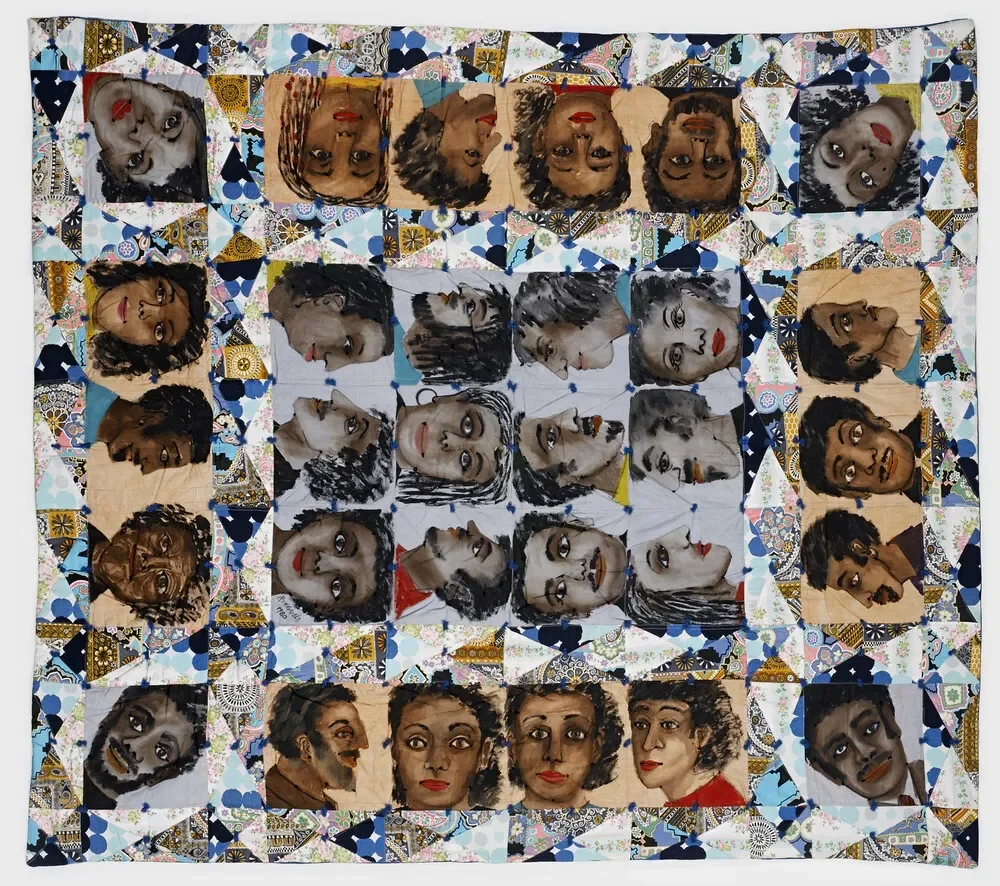
Echos of Harlem by Faith Ringgold 1980
Some of the most powerful Art in history has come from people who push past external barriers and rejection, and trust that their story matters.
In the case of many profound Artists of the past, I essentially find myself saying, “Thank God you had the good sense to center yourself and your perspective, despite the normative narratives that tried to sequester you. We really needed you to do that.”
Perhaps that is the risk Art keeps asking us to take. It is an uncomfortable balance of conviction and humility.
If you would like to get writing like this delivered to your inbox: